

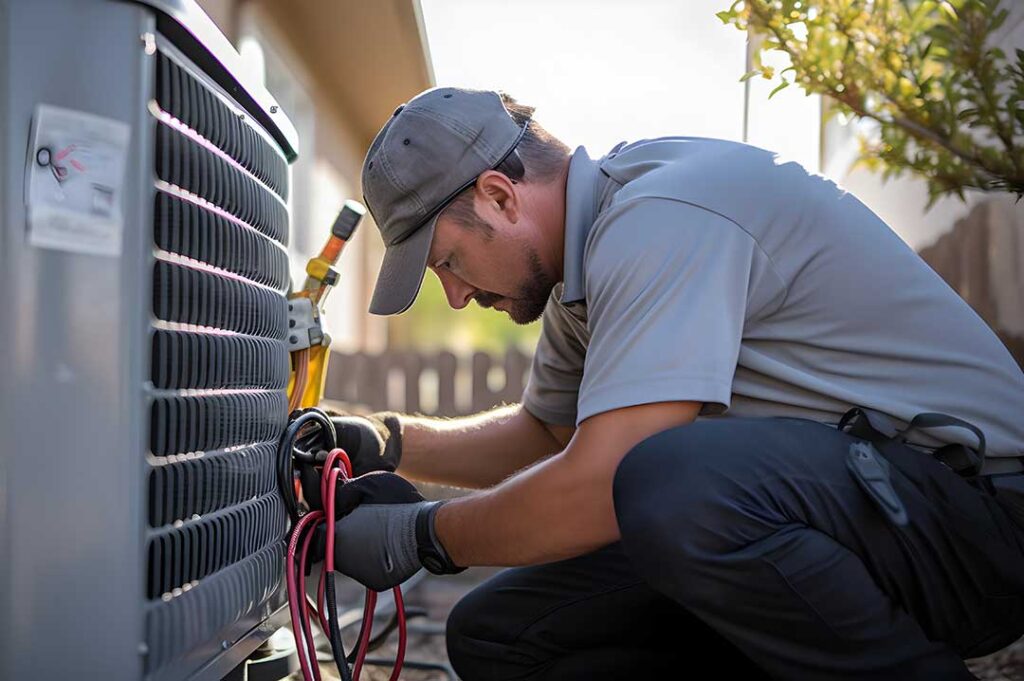
What is the typical cost of a new HVAC system?
For a typical home, a complete HVAC replacement may cost roughly $7,000 to $18,000, while more complex systems can exceed that range. The final price depends on the equipment type, home size, ductwork, electrical requirements, efficiency rating, installation difficulty, and whether heating and cooling are replaced together.
A basic replacement may involve swapping equipment with minimal changes to existing connections. A larger project may include new ductwork, electrical upgrades, condensate drainage, refrigerant-line changes, thermostat wiring, ventilation improvements, or modifications to fit newer equipment.
For households in Grand Junction, the local climate makes both cooling performance and dependable winter heating relevant. A system should be evaluated for the home’s actual heating and cooling loads rather than selected by size alone.
How much does each major HVAC option cost?
Equipment and installation prices vary widely, but the following planning ranges are common for residential projects:
- Central air conditioner replacement: Approximately $5,000 to $11,000
- Gas furnace replacement: Approximately $4,000 to $9,000
- Heat pump system: Approximately $7,000 to $16,000
- Dual-fuel system: Approximately $10,000 to $20,000
- Ductless mini-split system: Approximately $4,000 to $15,000, depending on the number of indoor zones
- Full heating and cooling replacement: Approximately $9,000 to $20,000 or more
These figures are broad budgeting ranges, not guaranteed prices. A small, straightforward replacement may cost less, while a home requiring ductwork, electrical work, or multiple zones may cost substantially more.
A furnace and air conditioner installed at the same time may cost more initially, but replacing both together can reduce duplicated labor and ensure that the components are properly matched.
Why does HVAC equipment size affect the price?
Larger equipment generally costs more, but oversizing can create comfort and efficiency problems. A system that is too large may reach the thermostat setting quickly without running long enough to remove humidity or distribute air evenly. A system that is too small may run for long periods and struggle during extreme temperatures.
The correct size depends on factors such as:
- Square footage
- Insulation levels
- Window type and orientation
- Ceiling height
- Air leakage
- Duct design
- Household occupancy
- Local temperature patterns
Square footage alone is not enough to determine the correct capacity. Two homes of the same size can require noticeably different equipment because of construction age, insulation, window exposure, and duct condition.
Which installation details add to the total?
The equipment itself is only part of the project. Installation conditions often explain why two replacement prices differ.
Common added costs include:
Ductwork repairs or replacement
Older ducts may be disconnected, undersized, poorly sealed, or damaged. Repairing accessible sections may be relatively modest, while replacing ducts throughout a home can add several thousand dollars.
Leaky ducts are especially wasteful when they run through unconditioned spaces. Heated or cooled air may be lost before it reaches the rooms where it is needed.
Electrical changes
Newer equipment may require a different circuit, disconnect, wiring arrangement, or control setup. Heat pumps and electric heating systems can require more electrical capacity than an existing system.
Condensate drainage
Air conditioners and high-efficiency furnaces produce water that must drain safely. If the existing drain is poorly routed or lacks proper protection, adjustments may be necessary.
Refrigerant lines and outdoor pads
A new air conditioner or heat pump may require compatible refrigerant lines, a stable outdoor base, and adequate clearance for airflow. Reusing old components is not always appropriate.
Thermostats and control wiring
Basic thermostats are usually less expensive than communicating or zoning controls. Some advanced systems require compatible wiring and matched indoor and outdoor equipment.
Access and labor conditions
Equipment located in a tight crawlspace, attic, closet, or difficult-to-reach mechanical area may take longer to remove and install. Limited access can affect labor even when the equipment price is unchanged.
Do higher-efficiency systems always save money?
Not necessarily. Higher-efficiency equipment uses less energy under the conditions measured by its rating, but savings depend on operating hours, utility rates, maintenance, duct losses, thermostat settings, and how well the equipment is installed.
A higher-efficiency system may make sense when:
- The home is occupied frequently
- Heating or cooling bills are high
- The system runs for many months each year
- The existing equipment is inefficient
- Ductwork and airflow are in good condition
- The equipment is expected to remain in service for many years
However, paying more for efficiency does not solve poor duct design, inadequate insulation, dirty coils, restricted airflow, or incorrect sizing. Those issues can reduce the benefit of expensive equipment.
What should a replacement quote include?
A useful written proposal should identify more than the equipment model and total price. It should explain:
- Equipment type and heating or cooling capacity
- Efficiency ratings
- Indoor and outdoor component compatibility
- Thermostat or control details
- Ductwork repairs included or excluded
- Electrical, drainage, and refrigerant-line work
- Removal and disposal of old equipment
- Permits and inspections, if required
- Labor and installation scope
- Warranty terms
- Conditions that could change the price
Unclear wording can make it difficult to compare proposals. For example, “new system installed” may not explain whether duct sealing, electrical changes, equipment pads, or condensate protection are included.
The lowest initial price is not always the lowest total cost. A less expensive system may have higher operating costs, limited warranty coverage, or components that need to be replaced sooner.
How can homeowners control the cost?
The most effective savings usually come from improving the project scope rather than simply choosing the cheapest equipment.
Useful questions include:
- Can existing ductwork be safely reused?
- Is the proposed system properly sized for the home?
- Are airflow problems being corrected?
- Would a simpler control system meet the household’s needs?
- Are electrical upgrades included in the price?
- What maintenance is expected each year?
- Are rebates or tax incentives currently available for the selected equipment?
- What happens if concealed damage is found during installation?
It can also help to separate urgent repairs from optional improvements. Replacing damaged ductwork or correcting unsafe electrical conditions may be necessary. Adding multiple comfort zones or advanced controls may be beneficial but discretionary.
When is repair more practical than replacement?
Repair may be reasonable when the system is relatively young, the problem is isolated, and major components remain in good condition. Replacement becomes more practical when repair costs are high, breakdowns are frequent, parts are difficult to obtain, or the equipment has persistent comfort and efficiency problems.
Age alone does not determine the answer. A well-maintained older system may continue operating, while a newer system with severe corrosion, refrigerant problems, or major heat-exchanger damage may not be economical to repair.
For area households, the best replacement decision usually balances purchase price, expected energy use, repair risk, comfort, and the length of time the home is likely to be occupied.
What is a realistic budget for a Grand Junction home?
A homeowner planning for a straightforward central system replacement may want to budget at least $8,000 to $15,000. A higher-efficiency system, heat pump, dual-fuel arrangement, extensive ductwork, or electrical work can push the project toward $15,000 to $25,000 or more.
The most reliable budget comes from identifying the full scope before comparing prices. Equipment capacity, duct condition, electrical needs, access, efficiency, and installation details matter as much as the name of the system itself.