
Which HVAC maintenance tasks can homeowners safely do?
Homeowners can handle several routine HVAC tasks without opening sealed refrigerant circuits, working with gas controls, or touching live electrical components. The most useful jobs are changing filters, keeping supply and return vents clear, cleaning accessible areas, checking the outdoor unit, and observing unusual system behavior.
Grand Junction, CO experiences hot, dry summers and cold, dry winters. That combination can leave outdoor equipment dusty, increase cooling demand during heat waves, and make reliable heating especially important during cold snaps. A simple maintenance routine helps equipment move air more effectively and makes developing problems easier to notice.
Before doing any maintenance, turn the thermostat off. For tasks near electrical components or the outdoor condenser, switch off the equipment disconnect or circuit breaker as well, and never remove access panels unless the manufacturer’s instructions specifically identify the task as homeowner-safe.
How often should an HVAC filter be changed?
Check the filter monthly and replace it when it looks visibly dirty, damaged, or loaded with dust. Many standard filters are changed every 60 to 90 days, but homes with pets, remodeling dust, frequent system use, or occupants sensitive to airborne particles may require more frequent replacement.
The filter size and airflow direction matter. Use the dimensions printed on the old filter or listed in the equipment documentation. Install the new filter with the arrow pointing toward the furnace or air handler, not toward the room.
Avoid assuming that the thickest or highest-rated filter is automatically better. A filter that is too restrictive for a particular system can reduce airflow, increase operating time, and contribute to freezing or overheating. The filter should fit snugly without bending, crushing, or leaving large gaps around the edges.
A dirty filter can cause:
- Weak airflow at the registers
- Uneven room temperatures
- Longer heating or cooling cycles
- Higher fan noise
- Excess dust around the home
- A frozen air-conditioning coil in some systems
Write the installation date on the filter frame. This makes it easier to identify patterns and determine how quickly the filter becomes dirty.
What should be checked around indoor vents and returns?
Keep supply registers and return grilles open and unobstructed. Furniture, rugs, curtains, storage bins, and pet bedding can block airflow and make one room feel uncomfortable even when the equipment is operating normally.
Vacuum dust from the grille surfaces and the surrounding floor or wall. Do not push a vacuum hose deep into ductwork, and do not remove grilles if doing so could damage them or expose wiring.
Return grilles deserve particular attention because they pull air back to the HVAC system. A blocked return can make the blower work harder and may create whistling or rushing sounds. If a room has a door that is usually closed, inadequate return airflow may also produce pressure differences that affect comfort.
If certain rooms remain consistently too warm or too cold, first check for blocked registers, closed dampers, dirty filters, drafts around doors and windows, and strong sunlight through uncovered windows. These simple factors often explain comfort complaints before equipment failure is suspected.
How can the outdoor air conditioner be cleaned safely?
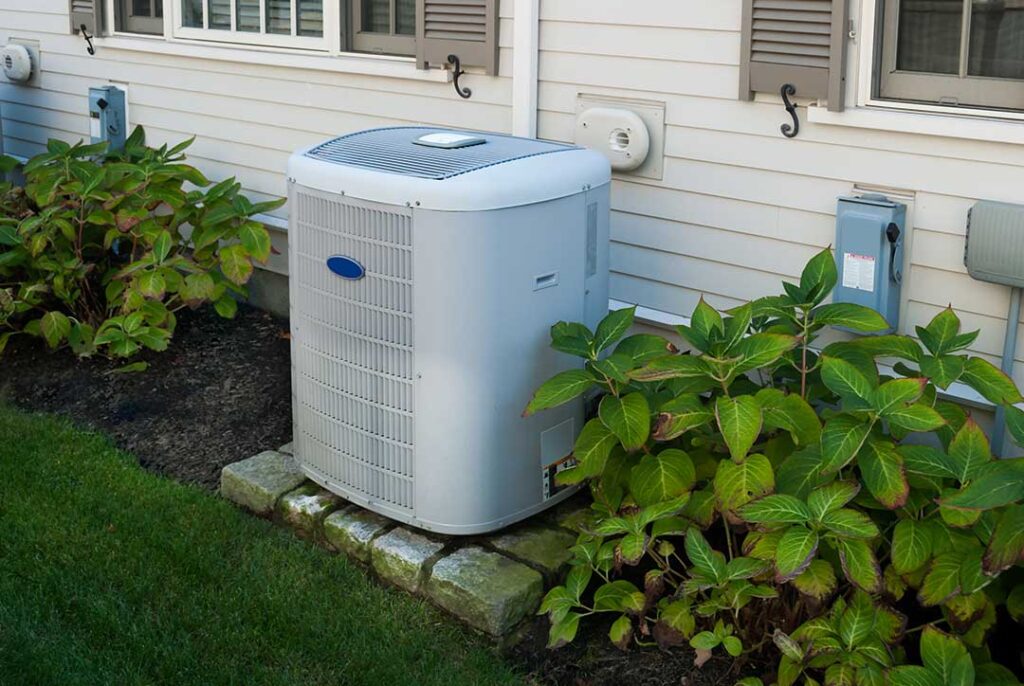
The outdoor condenser needs free airflow. Keep grass, weeds, leaves, cottonwood debris, and stored items away from the cabinet. A practical clearance is generally about two feet around the sides, although the equipment manufacturer’s instructions should take priority.
Turn off power before cleaning. Remove loose debris by hand or with a soft brush, taking care not to bend the thin metal fins. A garden hose may be used gently from the inside outward when the manufacturer allows it, but avoid pressure washers. High-pressure water can damage fins and force dirt deeper into the coil.
Do not spray electrical compartments, disconnect boxes, or control panels. Do not straighten severely damaged fins with a knife or screwdriver. Bent fins can sometimes be addressed with a fin comb, but extensive damage is better left alone.
During the cooling season, look for standing water, oil-like residue, unusual icing, or a condenser fan that does not run. These signs are not routine cleaning issues and may indicate a refrigerant, drainage, electrical, or mechanical problem.
What maintenance is useful for a furnace?
Homeowners can keep the area around a furnace clear and inspect visible components, but gas burners, heat exchangers, ignition systems, and safety controls should not be disassembled without the required training.
Keep combustibles, paint, cardboard, clothing, and cleaning chemicals away from the furnace. Maintain clear access to the service area and make sure combustion-air openings are not blocked.
If the furnace has a visible flame, it should generally appear steady and mostly blue, although the exact appearance depends on the equipment design. Yellow, wavering, lifting, or sooty flames can signal unsafe combustion. Turn the system off and seek qualified assistance if there is a strong gas odor, a carbon monoxide alarm, soot, scorch marks, or repeated shutdowns.
Never bypass a limit switch, pressure switch, flame sensor, or other safety device. Never store items inside a furnace closet unless the equipment instructions specifically permit it.
How should condensate drains be maintained?
Air conditioners and high-efficiency furnaces often produce water that leaves through a condensate drain. A homeowner can inspect the visible drain line and pan for standing water, algae, cracks, or overflow.
If the drain has a clearly labeled access opening and the equipment manual provides cleaning instructions, a small amount of water may be used to flush the line. Avoid pouring chemicals into a drain unless the manufacturer specifically recommends them. Chemical treatments can damage components or create harmful fumes.

Water around the indoor unit is not normal. It may result from a clogged drain, a frozen coil, a damaged pan, or a problem with the condensate pump. Shut down the system if water is approaching electrical equipment or causing ceiling, wall, or flooring damage.
What should homeowners do before summer and winter?
Seasonal checks are more useful than waiting for the first extreme-weather day.
Before summer:
- Replace or inspect the filter.
- Clear debris from the outdoor condenser.
- Confirm that the thermostat switches between heating, cooling, and off normally.
- Check that condensate drainage is visible and unobstructed.
- Run cooling briefly before the first major heat wave.
Before winter:
- Replace or inspect the filter.
- Clear the furnace area and combustion-air openings.
- Test smoke and carbon monoxide alarms.
- Confirm that supply registers are open.
- Run heating briefly before the first freezing night.
In dry high-desert conditions, dust can accumulate quickly even when there has been little rain. After windy weather, inspect the outdoor unit and nearby return grilles rather than relying only on a calendar-based schedule.
Which HVAC problems require qualified help?
Stop DIY work when a task involves refrigerant, gas piping, combustion testing, electrical panels, capacitors, wiring, sealed equipment cabinets, or repeated safety shutdowns. Refrigerant should never be added based only on a gauge reading or online instructions.
Prompt attention is warranted for burning smells, gas odors, carbon monoxide alarms, smoke, sparking, water near electrical equipment, severe vibration, loud metal-on-metal sounds, or an air conditioner that repeatedly freezes.
A homeowner’s role is mainly observation, cleaning, airflow management, and timely filter replacement. Those tasks do not replace required inspections or repairs, but they can reduce avoidable strain and provide useful information when a system develops a genuine fault.